The Best Pet Grooming Brush for Less Fur Everywhere
The best pet grooming brush is the one that lifts loose fur off your pet before it lands on your floor. A good tool makes a quick daily session easy, keeps your dog or cat comfortable, and cuts down the hair you find on the couch, the car seat, and your favorite sweater.
This guide sorts brushes, mitts, and combs by coat type and routine, so you can choose the tool that fits your pet instead of adjusting your pet to the tool.
How we choose a grooming brush
A brush has to earn its place in your routine, so we look at a few practical things first.
Coat match comes before everything else. Short coats need a tool that grabs loose hair without scraping skin. Long, dense coats need pins or teeth that reach under the top layer. Cats are especially sensitive about pressure, so a light touch matters more than force.
Comfort for the pet decides whether grooming happens at all. Rounded tips, flexible pins, and a handle that fits your hand keep a session calm. If your cat walks away after ten seconds, the tool is too harsh or you are brushing too hard.
Where the fur ends up is the final test. A good tool holds what it collects, so you can peel it off in one piece instead of chasing tufts across the floor.
We also favor tools you can rinse clean and use in more than one place: a quick pass before a walk, a longer session at nap time, or a tidy-up before guests arrive. Simple beats complicated every time.
Top picks by need
Different coats and different messes call for different tools. Start with the job you want to solve.
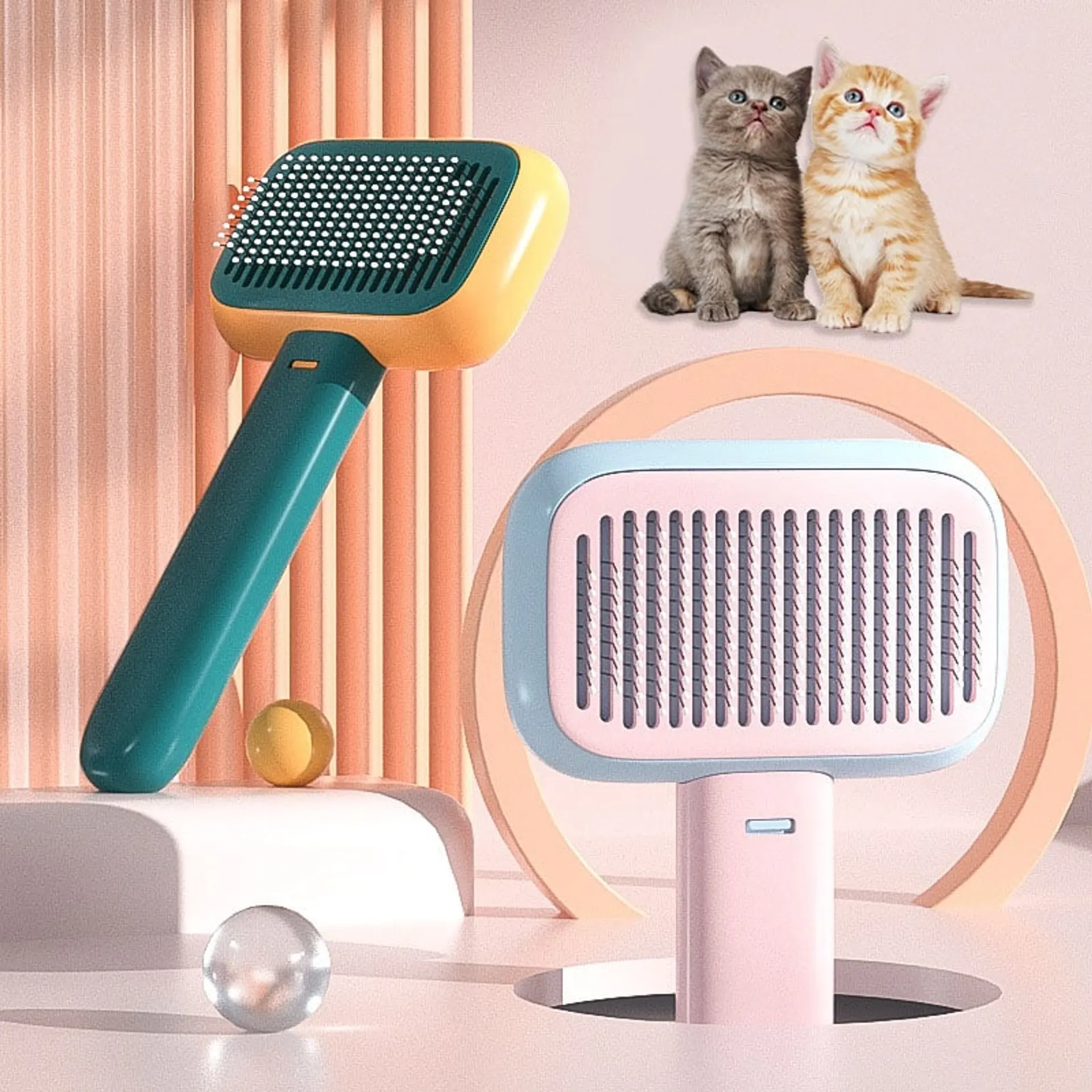
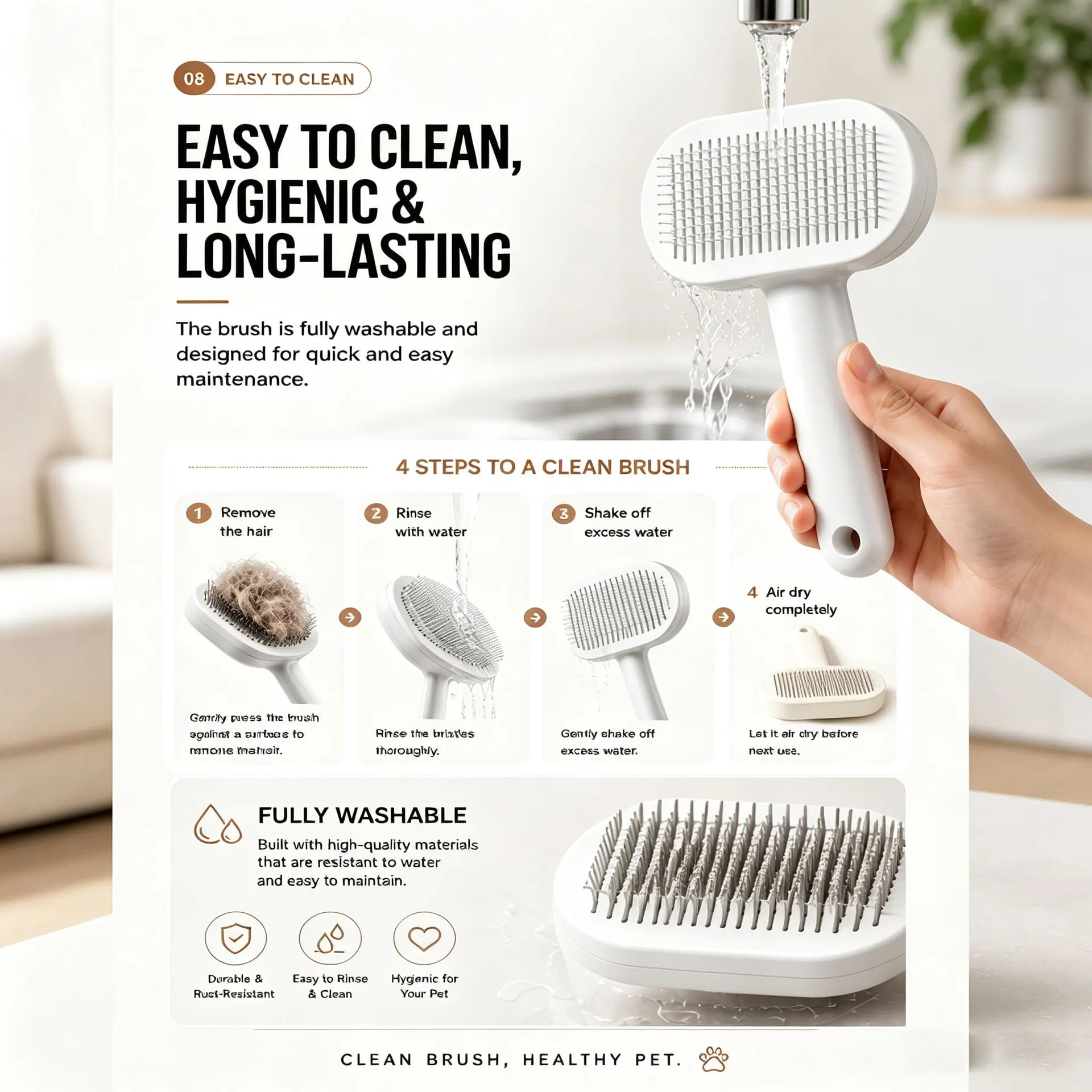
- For everyday coat care, a self-cleaning slicker brush reaches under the topcoat, lifts loose fur, and lets you click the hair away when you are done. It suits most medium and long coats.
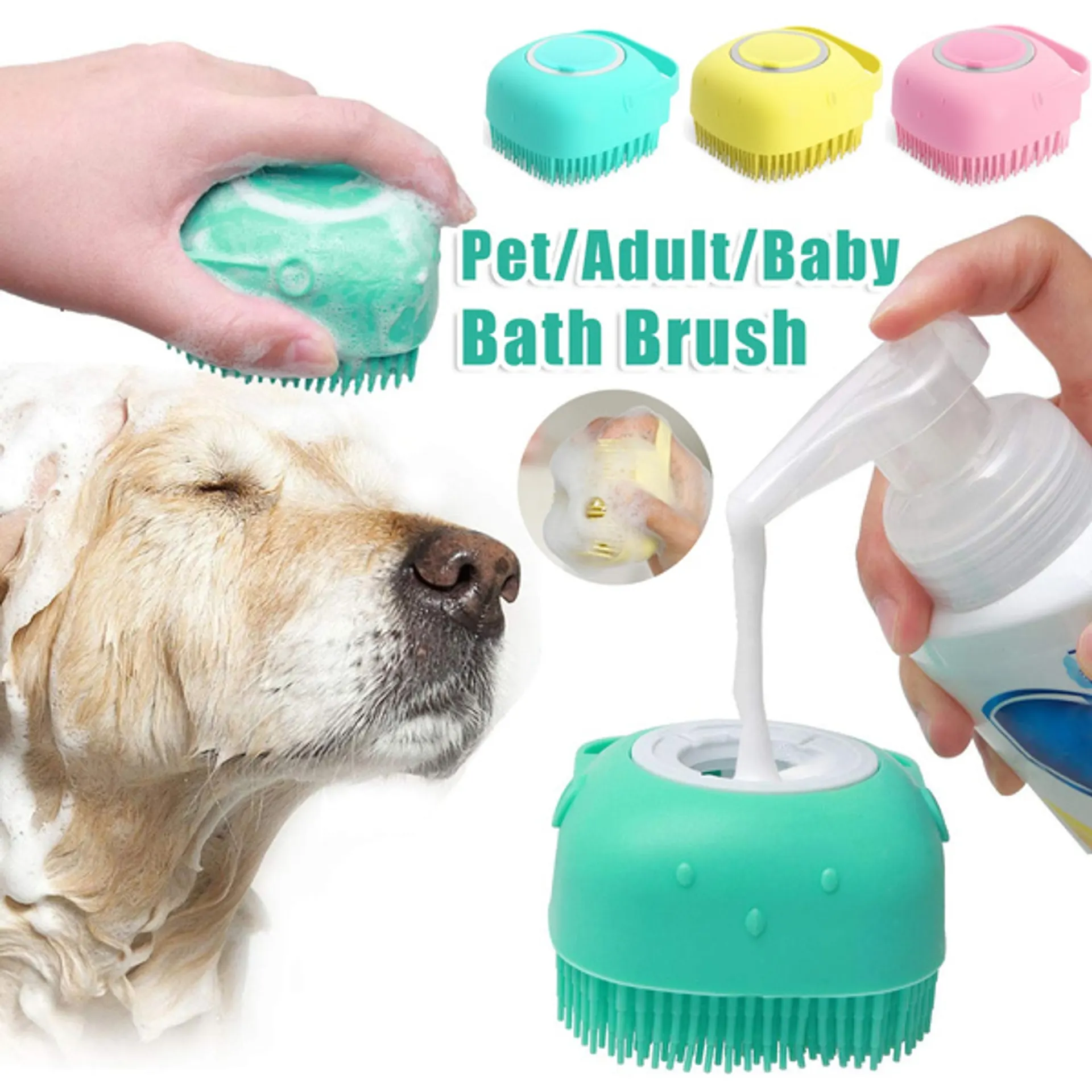
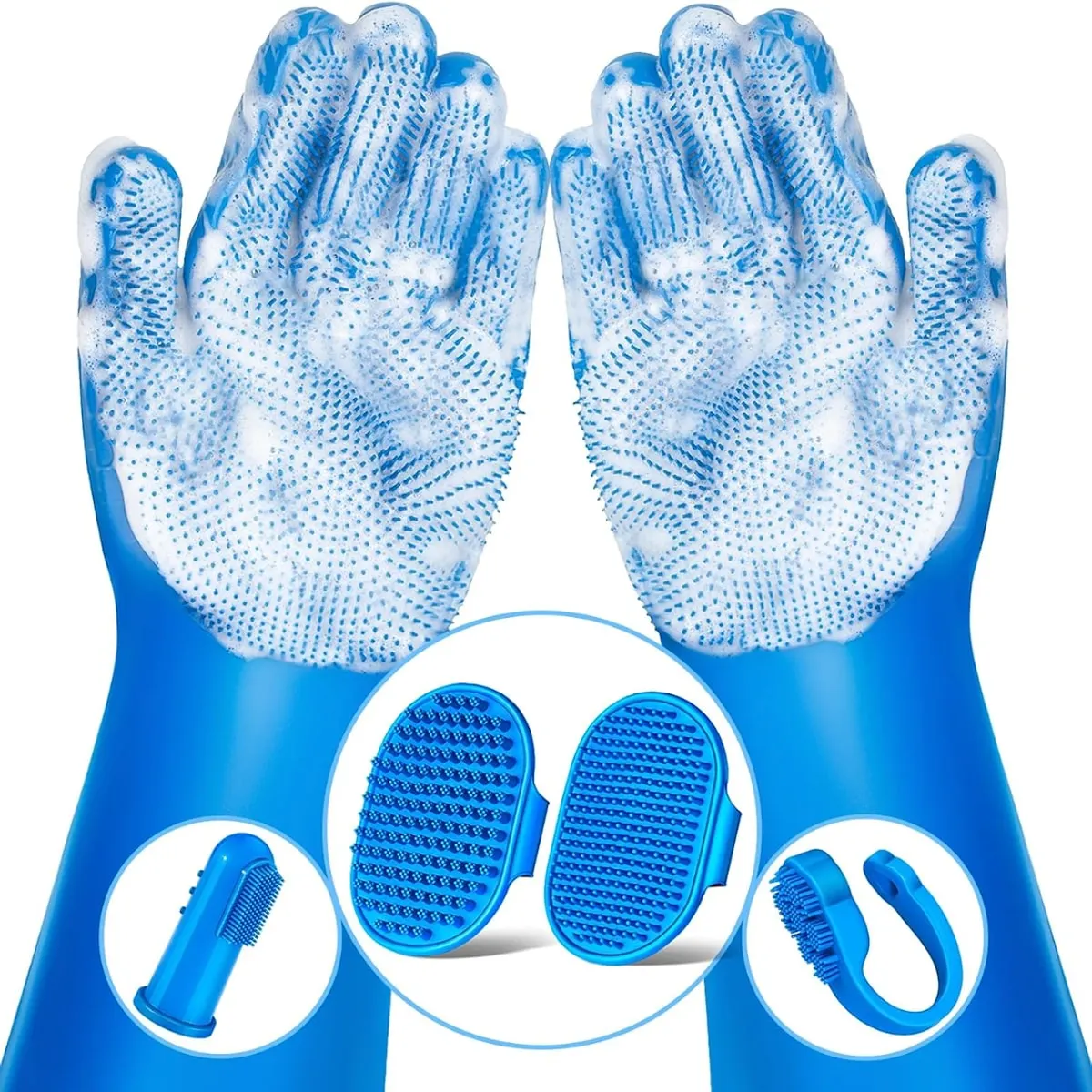
- For bath time and nervous pets, silicone bath massage gloves let you lather and loosen fur with your own hand, which most dogs tolerate far better than a brush. Cats often accept them too, especially around the shoulders.
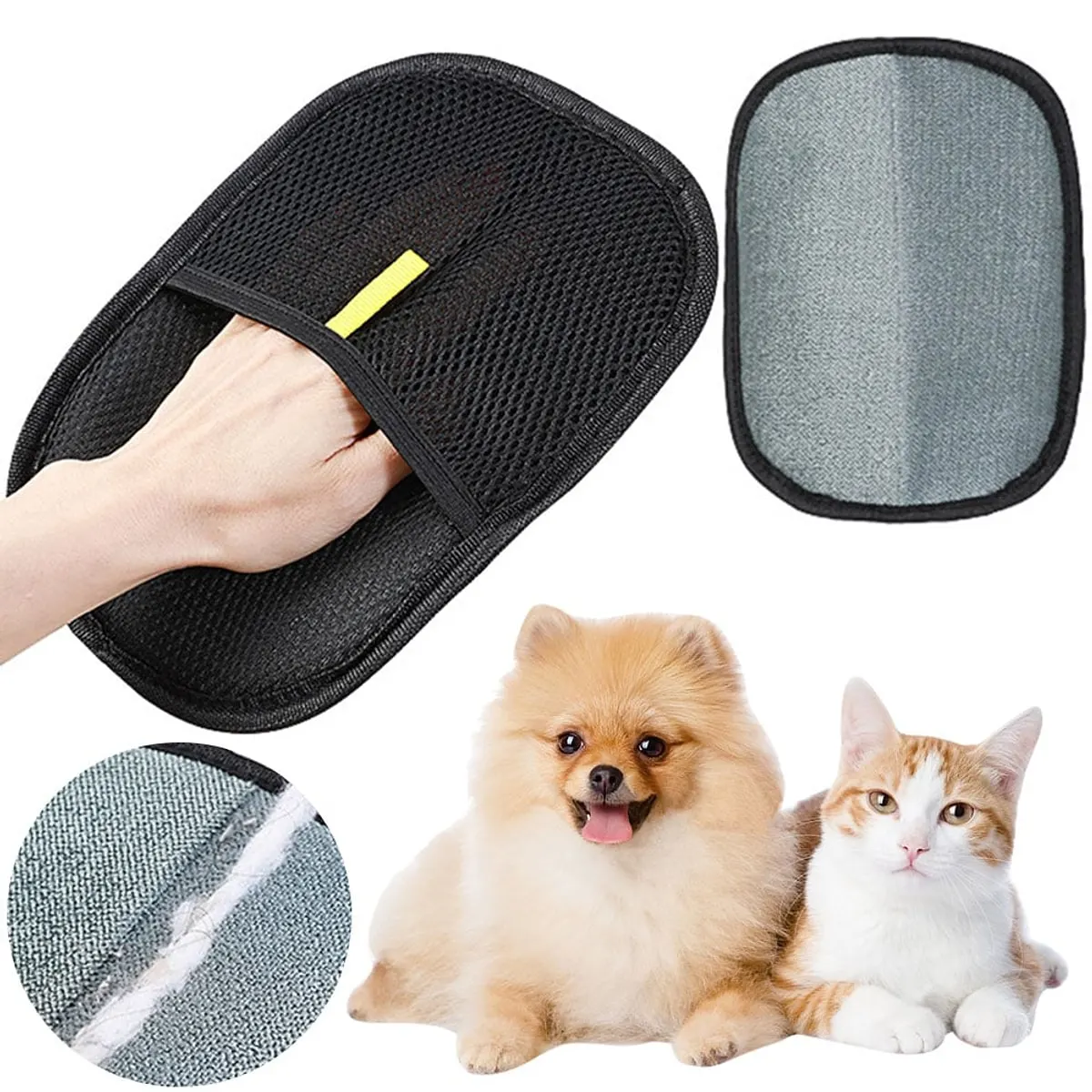
- For furniture, car seats, and bedding, a reusable hair remover mitt picks up the fur your pet already left behind. Keep one near the couch so a pass takes seconds.
- For short coats and finishing work, a stainless steel grooming comb gets into thin coats and around the face and tail without pulling.
If you want one tool that covers the most ground, start with a slicker brush and add a mitt for the sofa. Two tools handle most of the fur in a house.
Compare the options: which one suits your pet
Here is the short version, matched to the owner and the animal.
- Self-cleaning slicker brush: best all-rounder for dogs and cats with medium to long coats. Suits an owner who wants one tool for weekly sessions and easy cleanup.
- Silicone bath gloves: best for bath time, puppies, and cats that dislike bristles. Suits a household that grooms in the tub, since you wash and loosen fur at once.
- Hair remover mitt: best for sofas, car seats, blankets, and stairs. Suits anyone tired of buying lint sheets.
- Stainless steel comb: best for short coats, mats behind the ears, and a final fluff. Suits detail work more than full-body sessions.
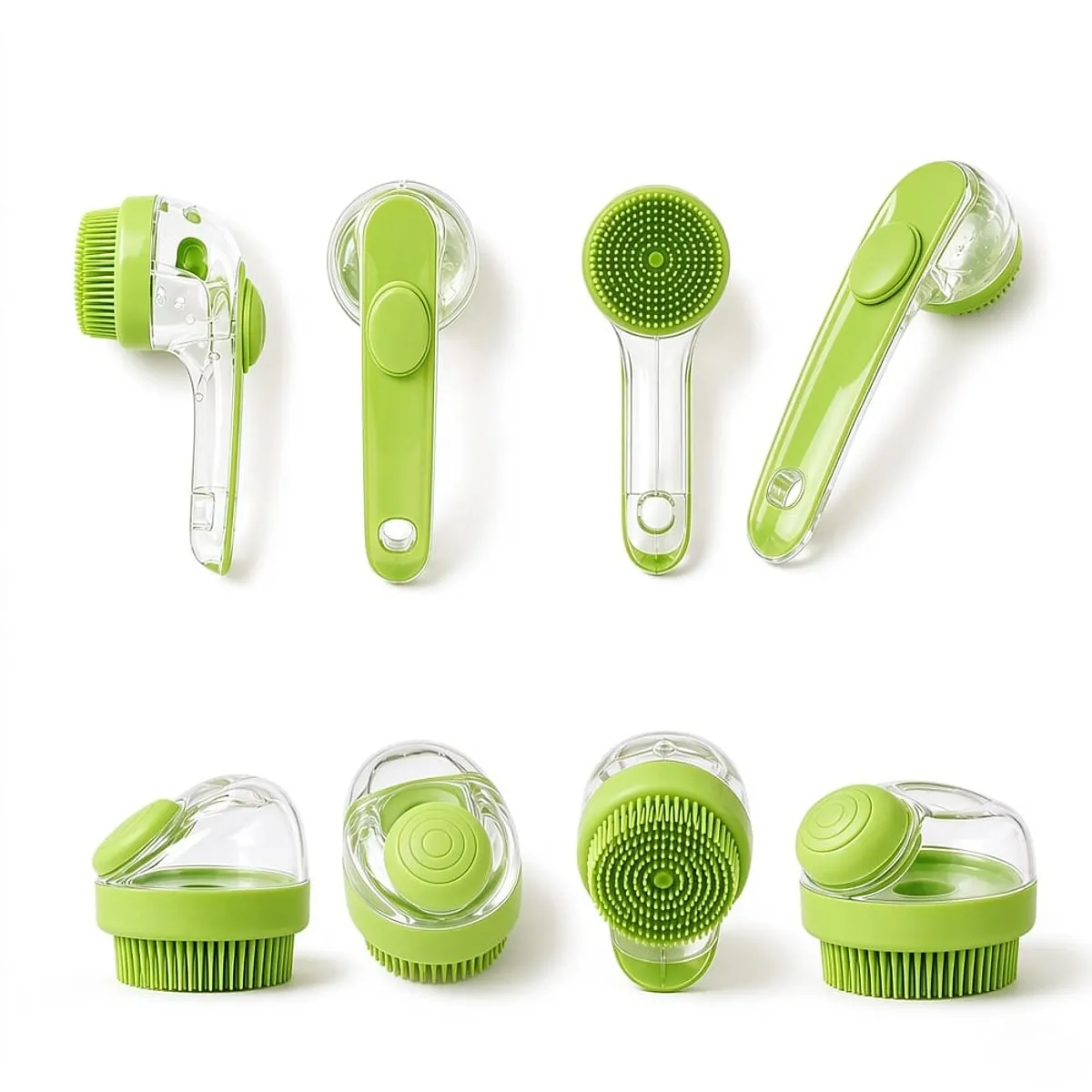
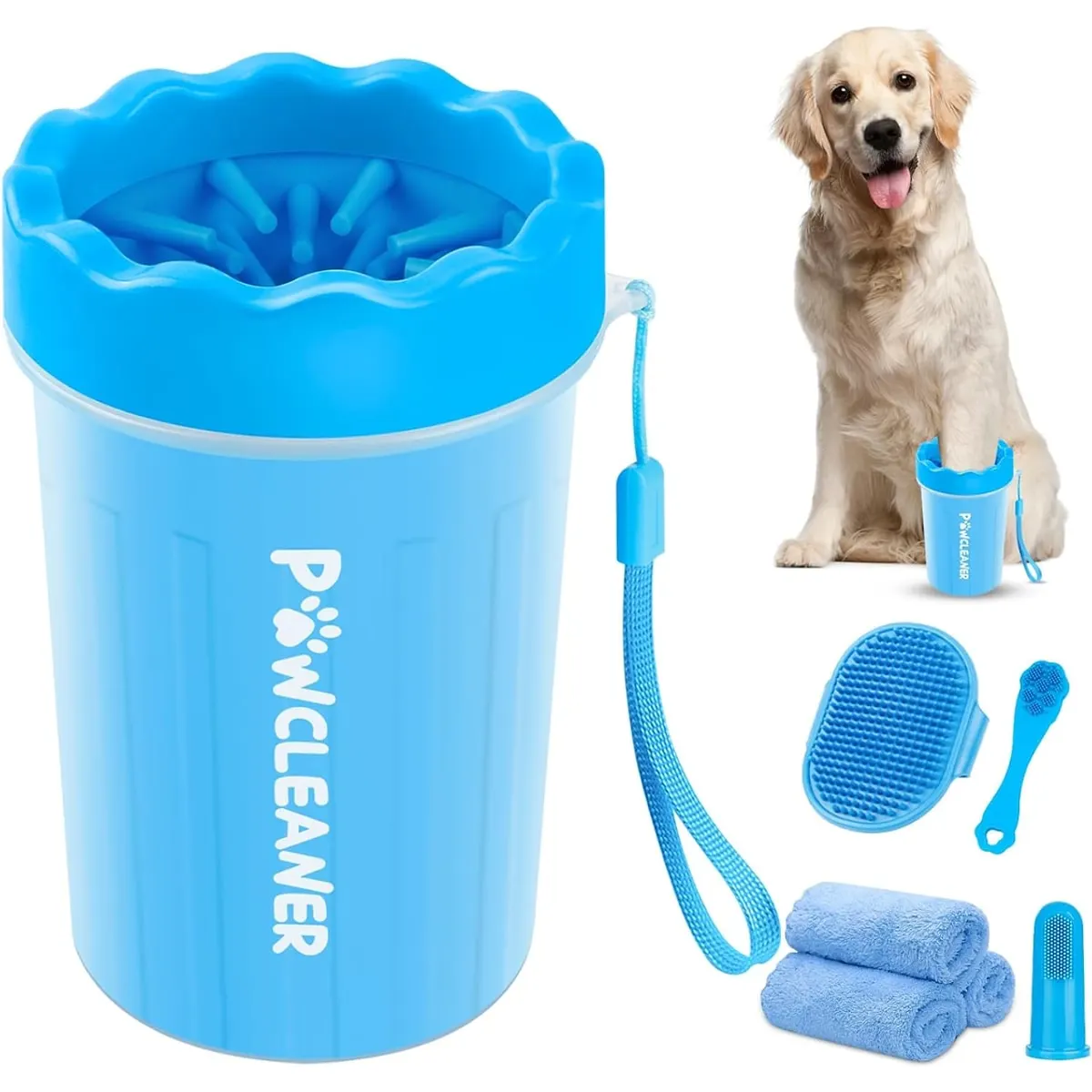
- handheld shower brush with a built-in dispenser: best for muddy paws and post-walk rinse-offs, because soap goes where you scrub.
- Multi-piece grooming kits: best for a new pet, a two-pet home, or anyone building a first grooming drawer. Suits owners who want a little of everything on hand.
Care and fit tips for calmer grooming
Short, frequent sessions beat one long one. Ten minutes while your dog settles on the rug, or a few gentle strokes while your cat naps, does more than a marathon on the weekend. Brush in the direction the coat grows, then follow with a light pass the other way on thick fur.
Watch the skin, not just the hair. Red patches, flinching, or a tucked tail mean stop and try a softer tool or a lighter touch. Never pull through a mat; work it loose in small sections from the outside in, and swap to a comb near the face, ears, and tail.
Tie grooming to good things. A treat after each session, a favorite towel at bath time, and a calm voice teach your pet that the brush means attention, not a fight.
Keep tools clean. Rinse silicone gloves and shower brushes after use, and pull collected fur out of pins and combs so they keep grabbing. Store a mitt in the car for trips and one by the couch for daily passes, and grooming stops feeling like a chore.
Frequently asked questions
- How often should I brush my dog or cat?
- Most dogs do well with two or three short sessions a week, and long-coated breeds often need a few minutes daily. Cats usually benefit from a quick pass every couple of days, especially during seasonal shedding. Watch how much loose fur you find on the couch as a guide. If the coat looks dull or you see mats forming, add a session rather than brushing harder.
- What is the best pet grooming brush for a cat that hates being brushed?
- Start with a soft silicone glove or a slicker brush used with almost no pressure. Let your cat sniff the tool first, then brush one shoulder for a few seconds and stop. Pair it with a treat and a calm spot on the couch. Cats often accept a hand-shaped tool better than bristles, and short sessions build trust faster than a full groom.
- Can I use the same brush on my dog and my cat?
- Often yes, as long as the tool matches both coats and you clean it between pets. A slicker brush or a stainless steel comb works for many dogs and cats. Keep separate tools if one pet has skin issues, fleas, or ringworm, since shared brushes can pass problems along. When in doubt, use one tool per animal.
- Do grooming gloves really remove fur from furniture?
- They do, and they are the easiest option for sofas, car seats, and blankets. Damp the glove slightly, wipe in one direction, and the fur collects in a clump you can peel off. A reusable mitt saves you from running out of lint sheets, and it works on bedding and stairs too. Rinse it after each use so it keeps its grip.
- How do I clean a pet grooming brush?
- Pull out collected fur after every session, then rinse the tool in warm water. Slicker brushes with a self-cleaning button release hair in one piece. Silicone gloves and shower brushes rinse clean quickly and air dry. Once in a while, wash plastic handles with mild soap and let everything dry fully before storing, so the tool stays fresh and ready for the next session.